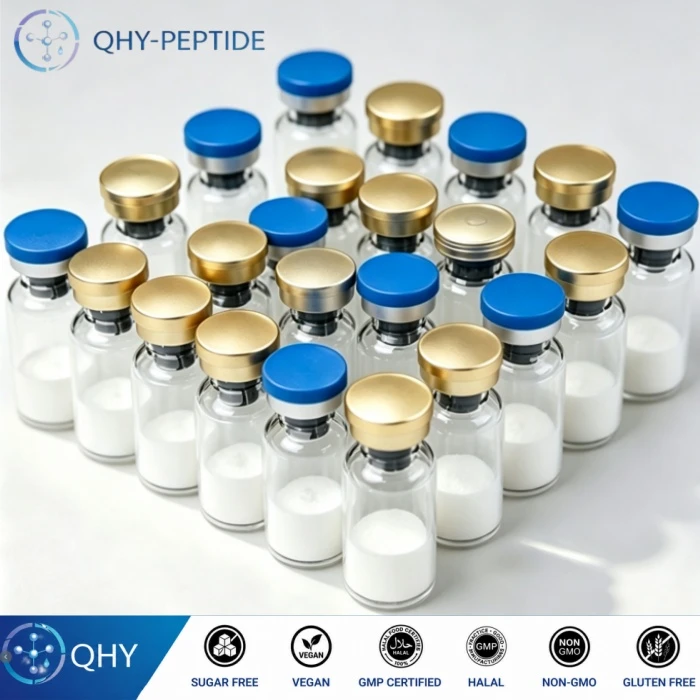
As life science research, drug discovery, and biotechnology continue to develop, custom peptides are becoming increasingly important research materials because their sequences and structural features can be tailored to specific scientific requirements. Unlike products with a fixed formulation, custom peptides do not have a single standard composition. Their molecular makeup depends primarily on the desired amino acid sequence, peptide architecture, and any additional features required for a particular research application.
Amino acids are the fundamental building blocks of custom peptides. They are linked through peptide bonds to form a peptide chain, while the type, number, and order of the amino acid residues determine the primary structure of the target molecule. Even when the same amino acids are used, changing their sequence can result in a different peptide with distinct molecular characteristics. Accurate sequence information is therefore central to custom peptide design and production.
Peptide length is another important structural characteristic. Depending on the research objective, a custom peptide can be designed with a specific number of amino acid residues. Changes in chain length can influence molecular mass, conformation, and other physicochemical properties, making sequence length an important consideration during peptide design.
In addition to the core peptide chain, some custom peptides may contain specific terminal structures or chemical modifications. Depending on the research requirements, modifications can be introduced at the N-terminus or C-terminus, while selected labels or other chemical groups may also be incorporated. These modifications can provide tailored molecular characteristics for specialized experimental systems.
Purity is an important quality attribute of a custom peptide rather than a fixed component of its molecular structure. Researchers may specify a particular purity level based on the intended application. During manufacturing, synthesis control, purification, and analytical testing are used to reduce process-related impurities and evaluate the final product against the agreed specifications.
Research projects may also include requirements related to salt form, solvent system, packaging, or storage conditions. Although these factors are not fundamental components of the peptide molecule itself, they can influence how the material is supplied, handled, and used in laboratory settings.
In practical terms, the core of a custom peptide is a precisely defined peptide chain built from a specific amino acid sequence, with additional structural modifications or molecular labels incorporated when required. Continued advances in peptide synthesis, purification, and analytical technologies are enabling increasingly precise molecular design, providing flexible and well-characterized materials for life science research, drug discovery, and biotechnology development.